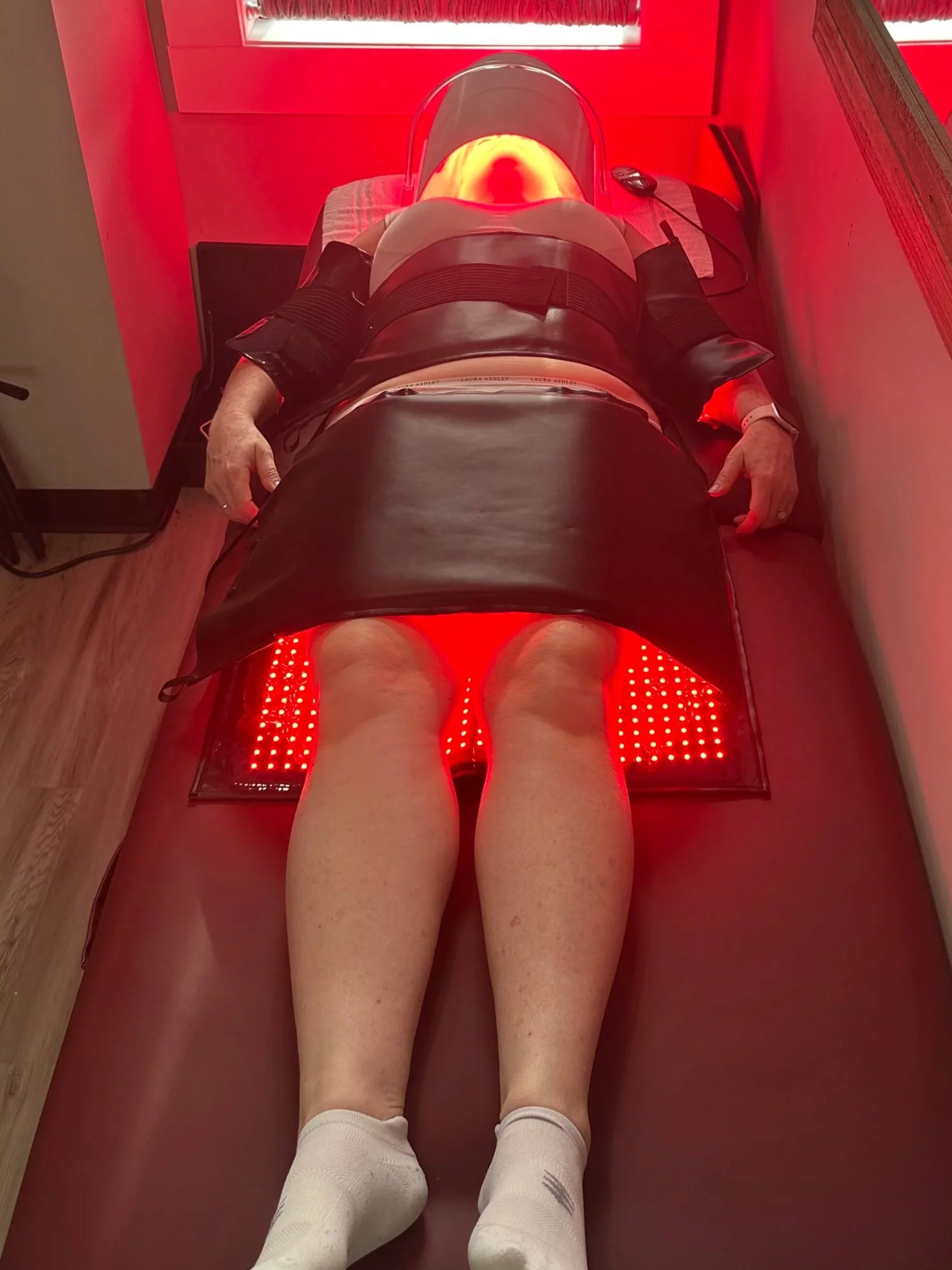
How Light Therapy Supports Whole-Body Health & Body Contouring
Light therapy has become one of the most talked-about advancements in both skincare and wellness—and for good reason. Red LED and Near-Infrared (NIR) light go far beyond surface-level beauty. These technologies work at a cellular level to support healing, reduce inflammation, and even assist in body contouring.
Let’s break down how it works—and how to choose the right device for real results.
What is Red LED & Near-Infrared Light Therapy?
Red and Near-Infrared light therapy use specific wavelengths of light that penetrate the skin at different depths to stimulate cellular activity.
Red LED Light (typically 630–660 nm) works more superficially, targeting the skin and upper tissue layers
Near-Infrared Light (typically 800–880 nm and 940 nm) penetrates deeper into muscles, joints, and connective tissue
Together, they create a powerful combination that supports both skin health and deeper systemic benefits.
How It Works: Cellular Energy & Healing
At the core of this technology is the stimulation of the mitochondria—the “powerhouse” of our cells.
When exposed to these wavelengths, your cells produce more ATP (adenosine triphosphate), which is essentially cellular energy. More energy means your cells can:
Repair faster
Function more efficiently
Reduce inflammation
Stimulate collagen and elastin production
This is why light therapy is often referred to as a “cellular recharge.”
Benefits for Overall Health & Wellness
While many people associate LED therapy with skincare, its benefits extend throughout the entire body.
Reduced Inflammation
Chronic inflammation is at the root of many health concerns. Near-Infrared light helps calm inflammation deep within tissues, making it beneficial for:
Joint pain
Muscle soreness
Injury recovery
Improved Circulation
Light therapy helps increase blood flow, delivering oxygen and nutrients more efficiently throughout the body—supporting healing and overall vitality.
Pain Relief & Muscle Recovery
Clients often love NIR for its ability to:
Relax tight muscles
Reduce soreness
Speed up recovery time
Skin Health & Anti-Aging
Red LED supports:
Collagen production
Improved skin tone and texture
Reduction in fine lines and wrinkles
How Red & NIR Support Body Contouring
One of the most exciting applications of this technology is in non-invasive body contouring.
Red and Near-Infrared light can help:
Stimulate Fat Cell Activity
These wavelengths encourage fat cells to release stored fatty acids, allowing the body to naturally process and eliminate them.
Improve Lymphatic Flow
By supporting circulation and lymphatic movement, the body is better able to flush out what’s released from fat cells—making treatments more effective.
Tighten & Firm Skin
Unlike many fat-reduction treatments, LED/NIR also supports collagen—helping prevent loose or crepey skin.
·Reduce Inflammation in Tissue
This creates a smoother, more even appearance in areas prone to fluid retention or puffiness.
The result: a more sculpted, toned look—without downtime or invasive procedures.
Understanding Wavelengths: Why They Matter
Not all devices are created equal, and wavelength is one of the most important factors.
Red LED (630–660 nm)
Targets skin and superficial tissue
Best for anti-aging, acne, and skin rejuvenation
Near-Infrared (800–880 nm)
Penetrates deeper into muscles and joints
Supports pain relief, reduces inflammation, and enhances recovery
Helps improve circulation and lymphatic flow, making it beneficial for body contouring
Near-Infrared (940 nm)
Reaches some of the deepest tissue levels among LED wavelengths
Supports circulation and oxygenation at a deeper level, helping tissues function more efficiently
Encourages lymphatic movement, which is key for reducing fluid retention and enhancing body contouring results
May promote a calming effect on the nervous system, supporting overall relaxation and wellness
Enhances the benefits of other wavelengths when used together, creating a more complete, full-body treatment
Devices that combine Red (630–660 nm), mid-range NIR (800–880 nm), and 940 nm offer a more layered and comprehensive approach, addressing both surface skin concerns and deeper structural tissues.
How to Choose the Right Device
With so many options on the market, it’s important to know what actually matters.
Look for Clinically Relevant Wavelengths
Avoid vague claims like “infrared” without specifics. You want:
630–660 nm (Red)
800–880 nm (NIR)
940 nm for deeper therapeutic support
Check Power Output (Irradiance)
A device needs enough power to deliver results—not just glow. Low-output devices may feel relaxing but won’t provide true therapeutic benefits.
Treatment Coverage
Larger panels allow for:
Full-body treatments
More efficient sessions
Better consistency in results
Consistency & Quality
Professional-grade devices are designed for:
Even light distribution
Reliable output
Long-term use
Safety & Comfort
Look for devices that:
Do not overheat
Are comfortable to use
Have been tested for safe exposure levels
Final Thoughts
Red LED and Near-Infrared light therapy are more than just a trend—they’re a powerful, science-backed way to support your body from the inside out.
Whether your goal is:
Healthier, more radiant skin
Pain relief and recovery
Or non-invasive body contouring
This technology offers a safe, effective, and holistic approach to achieving those results.
If you’re curious about incorporating Red LED/NIR into your routine or treatments, I’m always happy to guide you toward the best options for your goals.
What device(s) do I use and recommend? Click HERE!